
Merch Development Masterclass: A Free, Practical Guide
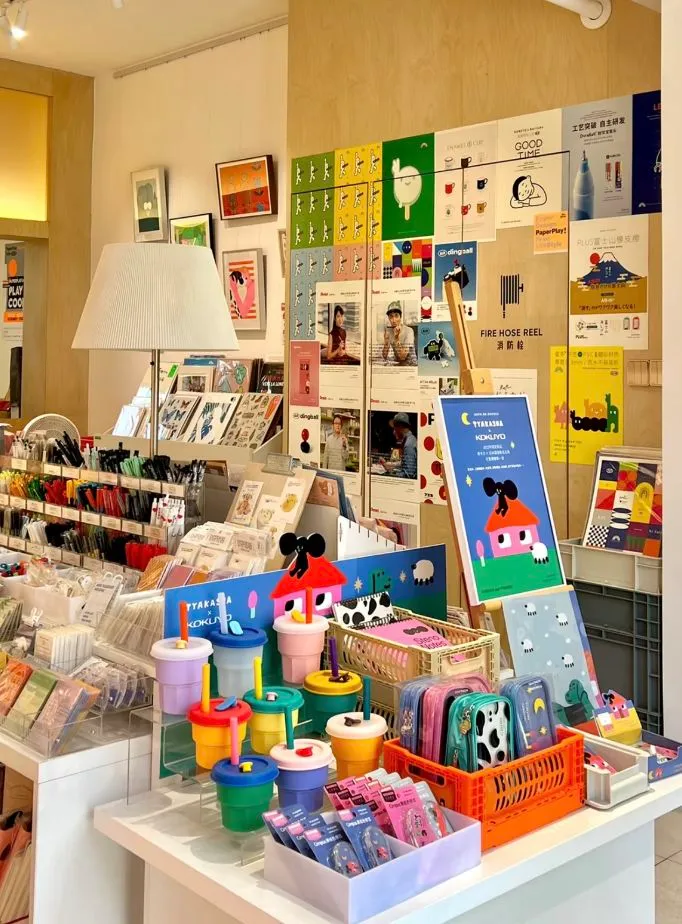
This is PopEcho's free masterclass on merch development. We built it with the printing specialists who run these jobs day to day, and with artists who have launched and kept selling their own IP merch.
The focus is practical. Not "how to make it look nice," but how to make something you can produce consistently, price fairly, and sell again. Six short modules tackle the problems that cost creators money: color shifts between batches, weak hand-feel, finishes that fall flat, dead inventory, low conversion, and shaky B2B delivery.
1. Category foundations: products, materials, and quality
Why does a product look fine online but feel cheap in your hand?
Two badges can look identical in photos while one feels solid and the other feels flimsy. Acrylic can arrive with cloudy edges or fine scratches. Cards can warp, scuff, or stain faster than you expect.
You learn to judge quality by material, construction, and surface finish rather than by product shots, and what to check before you approve a run: edge finishing, wear resistance, how well layers are bonded, and how likely a piece is to warp.
2. Design and finishes: the techniques that shape the final look
This module covers hot foil stamping, spot UV, glow-in-the-dark, thermochromic, water-activated, lenticular, and holographic or glitter films.
The common mistake is paying for a finish that nobody notices. Foil gets applied with nothing clear to emphasize. Glow looks dull in daylight and weak at night. Lenticular motion goes soft or misaligned.
The fix is treating finishes as tools for emphasis (on a logo, a title, a highlight, or a narrative layer) and making the file decisions that support them: contrast, line weight, spacing, and room for the finish to land.
3. Product selection: matching art to the right format
You have the illustration. What should it become so it sells?
High-detail art collapses at badge size. Gradient-heavy art shifts on the wrong substrate. Art meant to be worn and seen gets turned into a flat collectible and loses its reach.
You learn to choose by composition (detail density, negative space, type ratio) and by use path (worn and visible, sitting on a desk, or stored and collected).
4. Market and sales: demand, quantity, pricing, presentation
The products arrive, you post, and nobody buys. Or you misjudge pre-orders and end up buried in stock.
Three things fix most of this. Control inventory with small test runs and tiered pre-orders before you lock a quantity. Earn a higher price with a stronger backing card and one photo that shows edge and texture, not just the front. And research demand by asking "what would you pay?" with real price options instead of "do you like it?"
5. B2B merch: brand storytelling for organizations
How do you make merch that behaves like a brand asset instead of a generic giveaway?
Marketing wants "premium," procurement wants "cheap," and nobody has defined what premium means. Color drifts across batches and breaks consistency. Fixed event dates fall apart when approvals slip.
You learn to choose products from the goal (awareness, conversion, gifting, retention, internal culture), to set a color standard someone can sign off on (a physical proof or approved sample with a stated tolerance, for example a ΔE value), and to lock delivery gates: final art, proof approval, production, QC, shipping.
6. Innovation: standing out without gambling the budget
How do you differentiate without betting everything on novelty?
A sample looks great, then mass production turns unstable. Costs climb but sales don't follow.
So you test small: a limited run, one variable changed, a success metric set in advance. Use new techniques for concept pieces and limited editions, and keep your core items stable for repeat sales.
A note of thanks
We put this together with a lot of help from people who have done the work, and we're grateful to everyone who shared their real process and the lessons they learned the hard way. If it saves IP creators and artists a few detours on the way from idea to product, it did its job.
If you have something to add, a detail you tested, a mistake you dodged, a workflow that held up, this space is open. The more we trade what works, the better everyone's merch gets.