
Texture Arbitrage: How Small Creators Out-Design Big Brands with Mixed-Media Merch
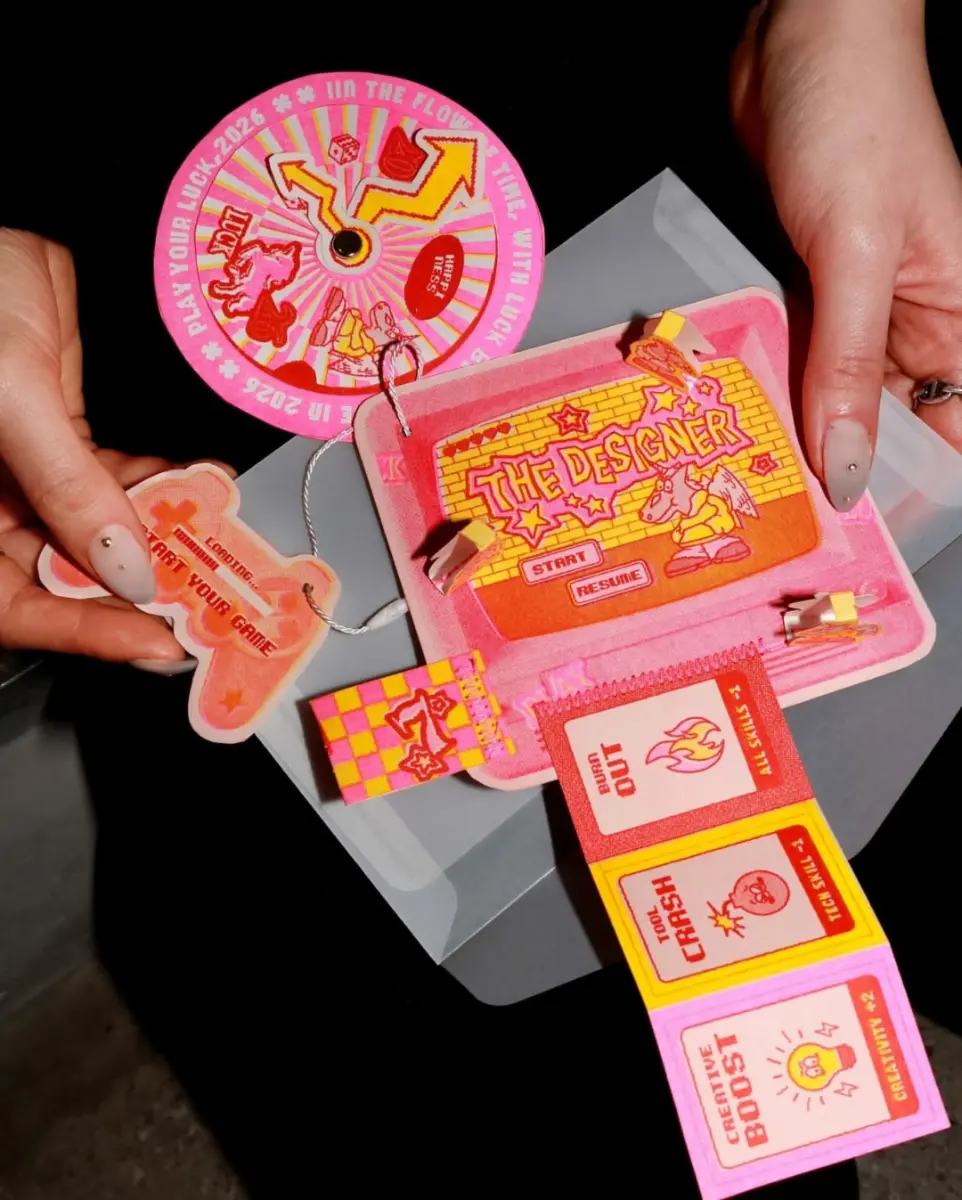
Texture arbitrage borrows a finance word for a production tactic: combine materials so the object feels worth more than it cost to make. The gap between what something costs to produce and what a buyer feels it's worth is the arbitrage, and it comes from contrast a hand can feel, soft against hard, matte against gloss.
Table of Contents
- What texture arbitrage means
- Why large runs can't mix materials easily
- Why 50 units beats 5,000 for mixed-media
- Why mixed textures support higher prices
- Turning PFAS compliance into an advantage
- 2D-to-3D topology for mixed-media plush
- FAQs
What texture arbitrage means {#what-it-means}
A mixed-media product combines material categories: a plush body with a PVC or resin face, resin accents on fabric, matte acrylic paired with a gloss UV spot. Each contrast a buyer feels signals that someone made a deliberate decision about every surface, and that perception is what lifts value above cost. The spend is targeted rather than broad: it goes to the surfaces a hand registers first.
Why large runs can't mix materials easily {#scale}
At 10,000-unit production runs, every material decision becomes a procurement problem. Adding a PVC face plate to a plush means a separate tooling order, a separate factory relationship, a separate QC checkpoint, and a separate logistics lane. That coordination overhead often kills the idea before it reaches a product manager. This isn't incompetence: the economics of scale reward standardization, and standardization works against mixing textures. A large operation is often too big to move quickly on mixed-media design and too invested in existing SKUs to experiment, while a 50-unit run of a hybrid plush-acrylic piece carries none of those constraints.
Why 50 units beats 5,000 for mixed-media {#50-units}
At 50 units you can source 50D minky for the plush body (dense, short-pile, holds printed detail far better than the cheaper 20D that pills after a couple of washes), run a separate face component through a small-batch resin caster, and hand-inspect every piece. At 5,000 units you're negotiating fabric by the bolt, accepting factory QC tolerances, absorbing a 3 to 5% defect rate as a line item, and letting the factory's standard runs drive your design decisions.
A practical checklist for a 50-unit mixed-media run:
- Plush body fabric: 50D minky or sherpa depending on character silhouette. Avoid 20D for anything with fine printed linework, since the pile obscures detail.
- Face component: cast resin or injection-molded PVC. Resin gives more finish control at low quantities; PVC needs tooling cost but scales cleaner if you move to 200+ units later.
- Assembly tolerance: design the face attachment with a 2mm recessed seat in the plush pattern, since flush-mounted faces detach under convention handling.
- Bleed lines: add 4mm bleed on any printed fabric panels, and keep linework at least 6mm from a seam, because factories cut with variance.
- Color: your digital art is RGB. Submit RGB and let the print convert with a calibrated profile, then run a physical color proof on the fabric before approving production, because saturated reds and teals shift most and a screen proof doesn't replicate fabric output.
Why mixed textures support higher prices {#pricing}
Flat acrylic charms still sell, but the format is commoditized. By the time a buyer reaches your booth they've handled fifty double-sided acrylic keychains, and the tactile experience is identical across every table, so art alone carries only so much price premium. Hand them a plush standee with a gloss-resin face, a matte fabric body, and a weighted base that doesn't tip, and they've never held that exact thing before. The contrast signals craft, and that's worth roughly $25 to $40 in perceived value above an equivalent flat piece. Buyers aren't irrational here; they're responding to real production complexity they can feel. In practice, mixed-material pieces around $65 often move faster than flat acrylics at $18, because the object communicates that it was harder to make.
Turning PFAS compliance into an advantage {#pfas}
The 2026 PFAS restrictions on fluorinated coatings in consumer goods have pushed factories that relied on PFAS-based water-resistant finishes to reformulate or re-source. Large brands with existing supplier contracts are renegotiating at scale; a small run isn't. Sourcing at 50 to 200 units, you can specify PFAS-free materials from the start. Non-fluorinated water-resistant treatments already exist, C0 DWR (durable water repellent) chemistry is the current standard replacement, available from compliant mills without minimum-order headaches at small volumes. Being able to tell a buyer your plush is PFAS-free and compliant with 2026 standards is a real, documentable advantage while larger supply chains catch up.
A short compliance checklist for fabric goods:
- Request mill certification for C0 DWR or an equivalent non-fluorinated treatment.
- Ask for OEKO-TEX or REACH compliance documentation on all fabric inputs.
- Avoid any supplier who can't provide written confirmation, since the liability exposure is real.
2D-to-3D topology for mixed-media plush {#topology}
Your OC can look perfect as a flat illustration and come back from the factory as a deflated version of itself, face 15 degrees off-axis, arms that won't hold position. The cause is topology: a 2D character has no volume logic, and the pattern maker is guessing how your flat design maps onto a 3D mesh of fabric panels. That guesswork produces lumps.
What to do before the sample goes out:
- Provide a turnaround sheet, not just a front view. Front, back, and 3/4 views give the pattern maker actual volume information instead of leaving them to interpolate.
- Mark weight distribution. If the head is large relative to the body, say so and specify a weighted insert in the base panel (typically a small plastic pellet bag), or the plush topples forward.
- Specify seam placement. Seams read as visible lines on a finished plush, so if your character has a clean silhouette, send a diagram showing where seams should follow it rather than defaulting to the factory's standard pattern.
- Simplify extremities for the first sample. Thin fingers, pointed ears under 1.5cm, and fine tail tips are the most common first-sample failures. Design them as separate sewn-and-attached components, or simplify them for the plush and treat the illustration as the canonical design.
The first sample's job isn't perfection, it's finding where your topology assumptions were wrong. Budget for two rounds of sampling before production approval.
FAQs {#faqs}
What's the minimum order for mixed-media plush with a PVC face component?
It depends on the method. Cast resin works at 20 to 30 units with a small-batch caster. Injection-molded PVC needs tooling, which usually makes sense at 100+ units to amortize the cost, so for Artist Alley quantities, resin casting is usually the right call.
How much does color shift matter for plush fabric printing?
Significantly. Saturated reds and teals shift most: colors that look vivid on screen can print muddy on fabric. Submit RGB for a calibrated conversion and always request a physical printed swatch before approving a full run, since a screen proof doesn't replicate fabric output.
What does "50D minky" mean and why does it matter?
The "D" is denier, a measure of fiber thickness. 50D minky has a shorter, denser pile than 20D, which keeps printed designs sharper and holds up to repeated handling. For merchandise buyers pick up over and over, 50D is worth the small cost difference.
Is the 2026 PFAS restriction relevant to plush without water-resistant coatings?
If your plush uses no fluorinated coating, you're likely unaffected. The issue arises when factories apply PFAS-based DWR treatments as a default finishing step without disclosing it, so ask explicitly whether any fluorinated finishing is applied.
How do I price mixed-media merch without underselling it?
Start with total unit cost (sampling, materials, assembly, and any coordination fees) and multiply by 3.5 to 4 times for retail. Mixed-media pieces at $60 to $80 sell consistently at conventions when the object communicates real craft, so pricing below cost to seem accessible is a losing position.
What's the most common reason a plush sample fails on topology?
Missing volume information. A single front-view illustration gives the pattern maker almost nothing to work with in 3D. A turnaround sheet with front, back, and side views, plus notes on proportions and weight distribution, sharply reduces first-sample failures.
Can I combine acrylic and plush in one product?
Yes, and it's one of the more effective texture combinations for perceived value. The reliable approach is a plush body with a separately produced acrylic or resin face that attaches via a recessed mount. Design the attachment point into both components from the start, since retrofitting it after sampling is expensive and usually shows.
Big brands will sort out PFAS compliance and find factories willing to run small mixed-media batches eventually. In 2026 they mostly haven't, and that window is where independent creators win on the object itself, pieces that feel considered surface by surface, rather than on price. Learn more at popecho.art.