
Custom Bath Towel File Setup: Fill the Canvas
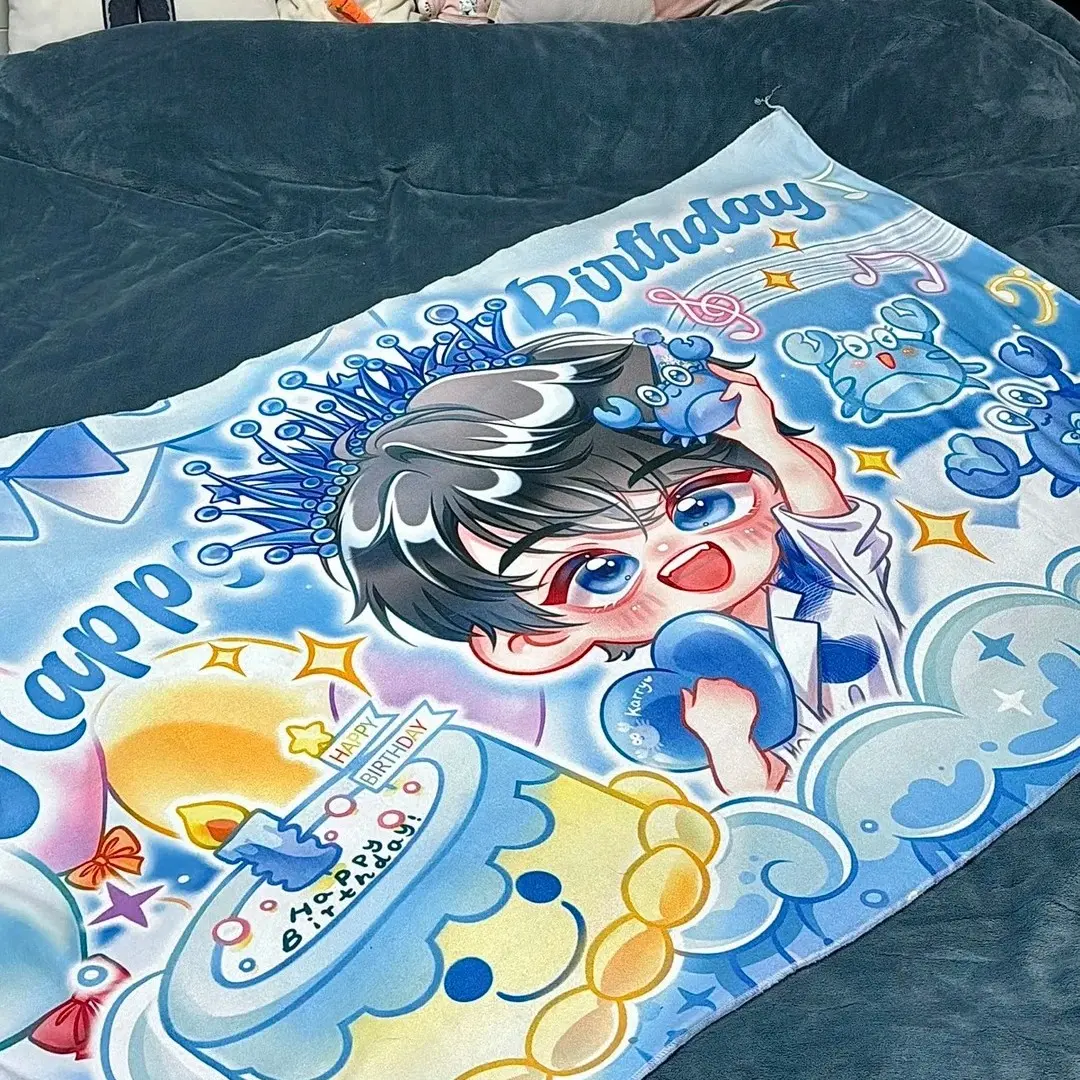
Custom Bath Towel File Setup: Fill the Canvas
How coral fleece pile and hem zones change every artwork decision you make.
TL;DR
A custom bath towel on 70×150 cm coral fleece is a high-perceived-value soft-goods drop — full-bleed sublimation across the entire surface is the practical standard because any unprinted area reads as off-white fabric, not white. The single most important setup decision is filling the canvas completely while keeping critical design elements at least 10–15 mm from every edge to survive hem stitching. Open the product in Popecho's onsite editor and the safe-zone guide loads automatically, so start there.
What This Subtype Actually Demands
Soft-goods merch plays by different rules than rigid formats. A coral-fleece bath towel at 70×150 cm is essentially a full adult-size surface — large enough to be a centrepiece reward tier in a crowdfunding campaign or a headline item in a VTuber merch drop, but the raised microfibre pile means your artwork arrives with a warm, slightly textured character rather than the flat precision of paper or acrylic. That texture is a feature for lifestyle and fan-support aesthetics. It becomes a problem when creators build the file like a postcard, expecting photographic sharpness from thin lines and tiny text. The second structural reality: the hem. Approximately 10–15 mm along every border is consumed by the fold and stitch that prevents fraying. Whatever you place in that zone is partially hidden in the finished product. Plan the layout knowing the hem exists before the first gradient is placed.
Setting Up the Artwork
Set your canvas to 700×1500 mm — the full 70×150 cm print area — and add bleed on all sides as your working document. Work in RGB colour mode, which is standard for the sublimation and reactive-print workflows Popecho uses for coral fleece. Minimum resolution is 150 DPI at full print dimensions; going higher does not improve output on this pile surface. Fill the entire canvas with artwork. The coral fleece base is off-white/cream, so any gap in coverage shows fabric tone — on a large format like this, accidental negative space is immediately visible.
Open the product in Popecho's onsite editor and the safe-zone guide appears automatically, marking the 10–15 mm margin from every edge. Use that boundary as your hard limit for text, character faces, and any detail that needs to survive the hem fold intact. Keep gradients and background fills running all the way to the canvas edge so the bleed zone is seamless. Accepted formats are PNG, JPG, and PSD — if you are working with layered source files, export a flattened PNG at full resolution for the clearest preview in the editor before submitting.
Surface and Production Decisions
Dye-sublimation on coral fleece produces vivid colour across large flat areas and photographic gradients. The microfibre pile diffuses ultra-fine detail — keep line weights at 2 pt minimum at final size, and avoid small body text anywhere on the towel surface. Highly saturated dark backgrounds can show slight colour variation across the pile nap direction; this is a material characteristic rather than a print defect, but it is worth factoring in when choosing palette.
The off-white base creates one firm rule: full-bleed designs are the default. Intentional use of the fabric colour is possible — some creators build compositions that let the cream tone act as a warm neutral — but it requires deliberate planning, not an unfilled canvas.
At 280 g and folded dimensions well above a standard badge or photocard, a custom towel ships bulkier than typical merch. If you are routing this through a campaign fulfillment plan, account for packaging dimensions and postage tier before setting your reward price. Popecho produces in 7 days, so lead time is tight enough for a campaign timeline, but the shipping leg for a bulky soft good can add days that smaller items do not.
What Trips Creators Up
Leaving the background unset. On rigid substrates an unset background is white. On coral fleece it is cream-ivory. At 70×150 cm, the difference is immediately obvious. Fill the canvas or choose the base tone intentionally.
Placing key details near the edge. The hem fold hides the outermost 10–15 mm on all four sides. Character faces, signature text, and QR codes that drift into this zone are partially stitched into the seam. Use Popecho's editor safe-zone guide as your non-negotiable boundary.
Using fine lines or small text. Coral fleece pile softens detail that would read clearly on paper or acrylic. If the line needs to be read, make it heavier. If the text needs to be read, make it larger.
Underestimating packaging weight. A folded 70×150 cm towel is not envelope-shippable. Creators who set campaign shipping costs based on badge or photocard rates discover the gap at fulfillment. Price the shipping tier before the campaign goes live.