
Custom Travel Pillow: File Setup for a U-Shaped Canvas
Custom Travel Pillow: File Setup for a U-Shaped Canvas
Why the inner-curve seam is your hardest constraint — and how to clear it.
TL;DR
A custom travel pillow is a 28×28 cm U-shaped neck pillow with a full-surface sublimation print covering the entire shell, available in PP cotton or memory foam fill from a single art file. The hardest constraint is the inner-curve seam: artwork placed in that zone folds under and disappears. Open the product in Popecho's editor, let the U-shaped die-cut outline load, respect the 5–8 mm safe zone, and your file is ready for either fill variant.
What This Subtype Actually Demands
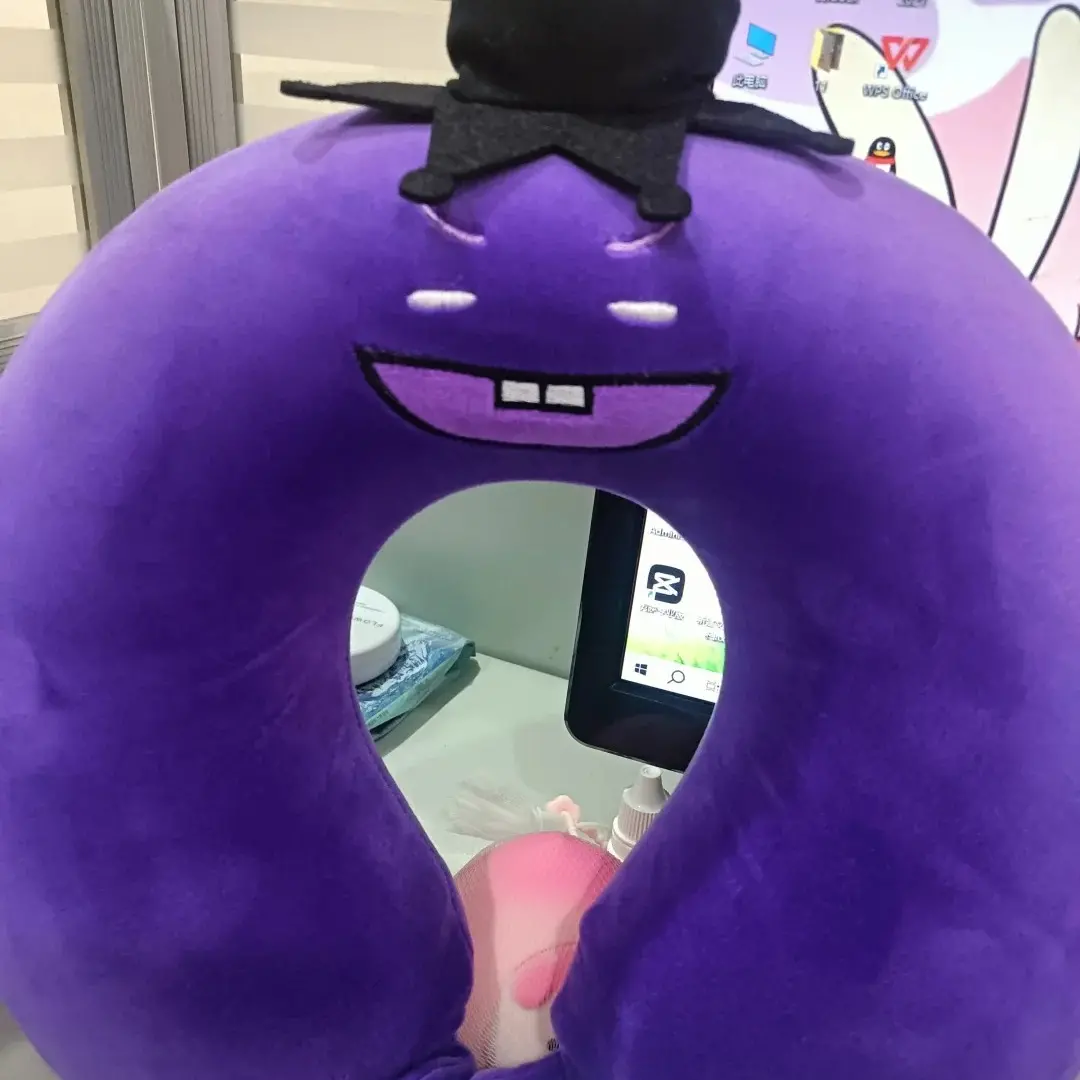
A U-pillow is not flat merch in disguise. Every badge, card, or standee in your lineup lives on a rectangular canvas with four predictable edges. A custom travel pillow is a closed, curved shape — the inner arc of the U is stitched into a seam, and whatever artwork you place there gets folded under during assembly. It will not appear in the finished product.
That constraint matters more than resolution or color mode for this form. The printable shell wraps the entire exterior, so full bleed is expected and achievable — but the inner-curve exclusion zone is real and unforgiving. The good news: both fill variants (PP cotton and memory foam) use the same print file, so a creator offering both as tier options only needs to prepare artwork once.
Setting Up the Artwork
The canvas is a 280×280 mm U-shaped profile, not a flat rectangle. Do not approximate it with a square crop and hope for the best.
Open the product in Popecho's onsite editor and the correct U-shaped die-cut outline loads for this variant automatically. The safe-zone overlay also snaps into place over that outline, marking the 5–8 mm inward boundary you need to keep faces, logos, and any cheering text clear of every cut edge. The editor also marks the inner-curve stitching boundary — the hard exclusion zone described above — so you can see exactly how much of the lower arc is off-limits before you finalize composition.
File prep specifics: submit PNG or JPG at 150 DPI measured at the 280×280 mm finished size. Work in RGB — this is a sublimation workflow, and Popecho's editor will flag if a CMYK conversion is needed for your file. Extend artwork to all edges of the U-shaped template for full bleed; any gap between your artwork boundary and the hem will print as white fabric.
(One practical note: if you are placing character art, position the focal point — face, eyes, logo — in the upper panel of the U, well above the inner arc, where it will be fully visible when the pillow is in use.)
Surface and Production Decisions
Sublimation on a fabric shell behaves differently from sublimation on hard acrylic or paper stock. Expect a 5–10% saturation drop after heat transfer onto the pillow fabric. Deep blacks can flatten and neons lose their edge — compensate with a slight saturation boost in your source file before upload.
Fine-line detail below roughly 2 mm may soften on the PP cotton fill, which has a slightly more textured surface. Memory foam fill uses the same shell fabric and the same print file, but the denser interior makes the pillow hold its U-shape more rigidly — which also makes the inner-curve seam more pronounced. If your artwork is already cleared of that zone, the stiffer fill is not a problem; if you pushed close to the boundary assuming some forgiveness, the memory foam variant will show the issue more clearly.
Production lead time is 18 days. That is longer than most flat-print merch. For Kickstarter campaigns or event drops, build this into your reward schedule before you launch — not after fulfillment begins. Orders of 500 or more units move outside the standard tier and require reaching Popecho's bulk custom specialist directly at checkout.
What Trips Creators Up
Placing the focal character face near the inner arc. The inner-curve seam folds under on assembly. Art that looks centered on a flat preview can vanish at the bottom of the U in the finished pillow. Use Popecho's editor's inner-curve boundary marker to check clearance before finalizing.
Treating the canvas as a square. A 280×280 mm bounding box is technically square, but the U-shape punches out of that area. Artwork built on a plain square canvas without the die-cut outline active will have corners and lower-rectangle zones that do not correspond to any real surface — leading to unexpected white edges or misaligned composition.
Underestimating saturation loss. Sublimation onto woven fabric is not the same as printing onto coated paper. Add a deliberate saturation boost — especially for deep blacks and brand accent colors — so the finished pillow reads with the vibrancy you expect from your screen preview.
Missing the lead time in event planning. Eighteen production days is easy to overlook when your other merch prints in three to five. Lock the pillow order before every other item in your convention or Kickstarter fulfillment queue.